
Competition
Execution
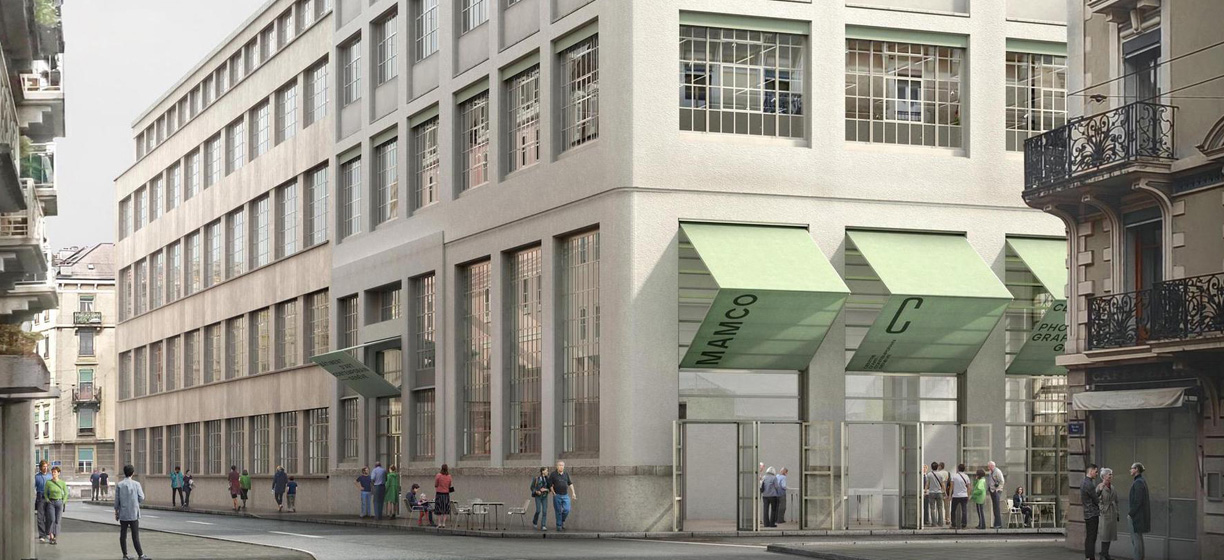
The existing load-bearing structures of the Contemporary Art Building in Geneva, built between 1939 and 1966 and regularly transformed over time, are in good condition. They illustrate part of the history of 20th-century construction through several emblematic innovations such as mushroom slabs, prefabricated ribbed floors, and prestressed reinforced concrete slabs. Since these structures were originally designed for industrial loads, they offer considerable reserve capacity for their new use as a museum.
The intervention strategy on the structure is guided by three key principles: minimal invasiveness, use of the existing load capacity, and the creation of flexible spaces for various functions. Two new structural cores are created — a new staircase and lift core, and a new goods lift shaft. The openings through the prestressed slabs are feasible since the prestressing system is bonded. At the interface between the two buildings, the separating wall is partially replaced by a shear wall system connected to the existing façade columns, freeing up a wide ground-floor space. On Rue des Vieux-Grenadiers, the mezzanine added in 1957 and 1965 is partially removed to create the double-height entrance hall, revealing the original volume. On the 4th floor, the replacement of four columns with two prestressed reinforced concrete girders allows for the insertion of the multipurpose hall. On the exterior, the existing steel staircases are modified and extended up to the roof, which is now made accessible.
To meet the fire resistance requirements of REI 60 for walls and slabs and R 60 for columns, the steel structural elements receive an intumescent coating, ensuring compliance while maintaining their existing appearance. The overall lateral stability is provided by the new staircase, lift and goods lift cores, by the existing reinforced concrete frames, as well as by the diaphragms of the floor slabs and the structural connection between both parts of the building. Seismic compliance is verified according to the response spectrum method, allowing the necessary reinforcement measures to remain limited.
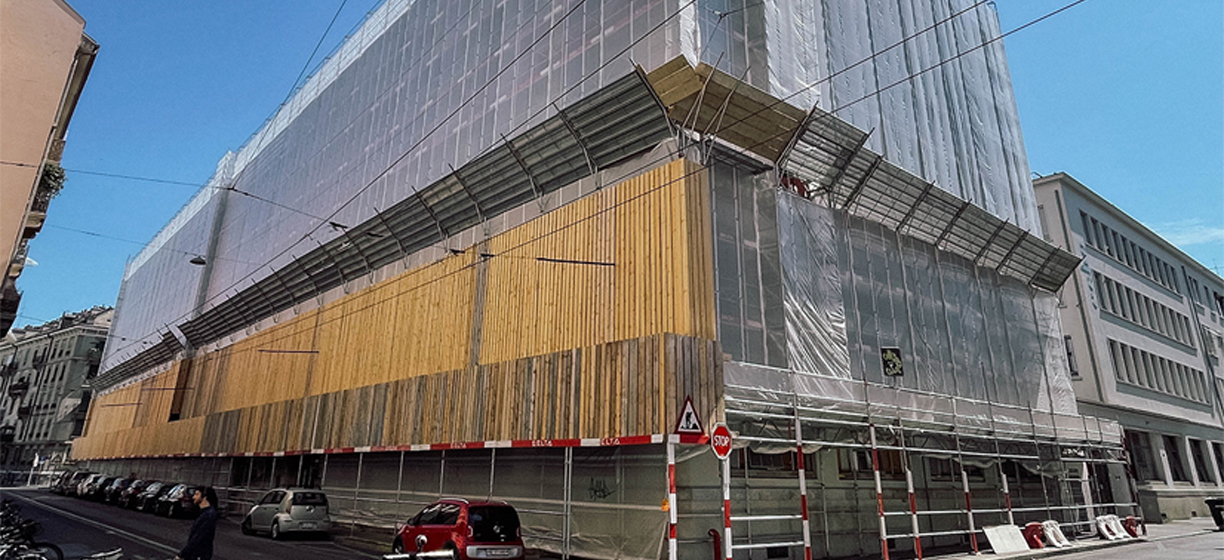
The façades of the BAC are plastered on the south side and exposed concrete on the north. They show various signs of weathering and ageing — cracks, carbonation, and alkali-aggregate reactions. The planned façade works aim to preserve the historic appearance of the building.
Client
City of Geneva
Heritage Buildings DepartmentArchitects
Kuehn Malvezzi, Berlin
CCHE, GenevaCivil and Façade Engineer
INGPHI SA, Lausanne
Services performed
Design competition (winner)
Phases 31, 32, 33Project duration
Ongoing
Publication
Project Team

Alexandre
Wiedmer
Civil engineer

Bernard
Adam
Associate - Project Manager - Civil Engineer

Bryan
Garcia
Civil Engineering Draftsman

David
Luc
Facade planner - Applied physics engineer

Deyllan
Makarison
Civil engineer

Gustavo
Massa
Civil Engineering Draftsman Apprentice

Philippe
Blais
Civil engineer

Pierre
De Groot
Project Manager - Civil Engineer

Quentin
Cernigoi
BIM Modeler - Civil Engineering Draftsman

Timéa
Oppliger
Civil Engineering Draftswoman