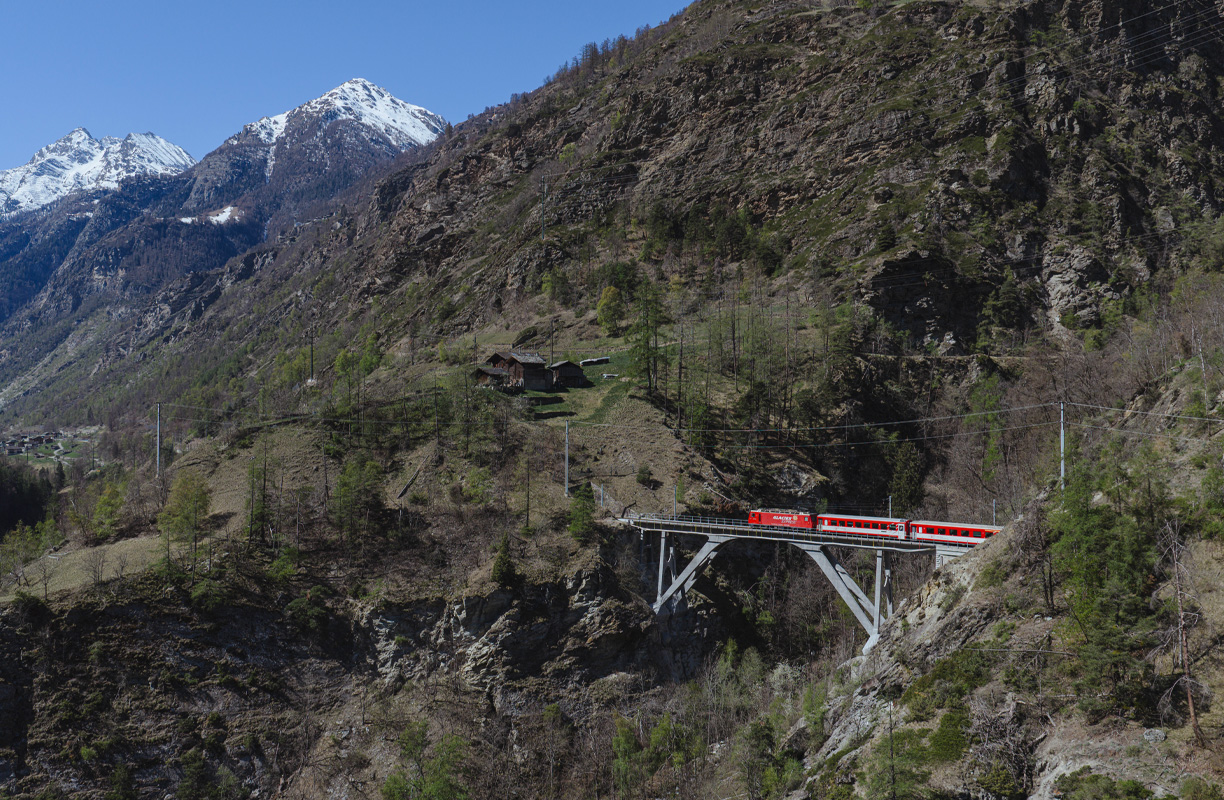

Between Visp and Zermatt, a sculptural bridge required full UHPFRC jacketing to preserve the image of a strut-supported bridge cast in a single piece while meeting structural and contextual constraints.
As part of a rehabilitation project on the railway section between Visp and Zermatt, interventions were required on several bridges and tunnels near Stalden.
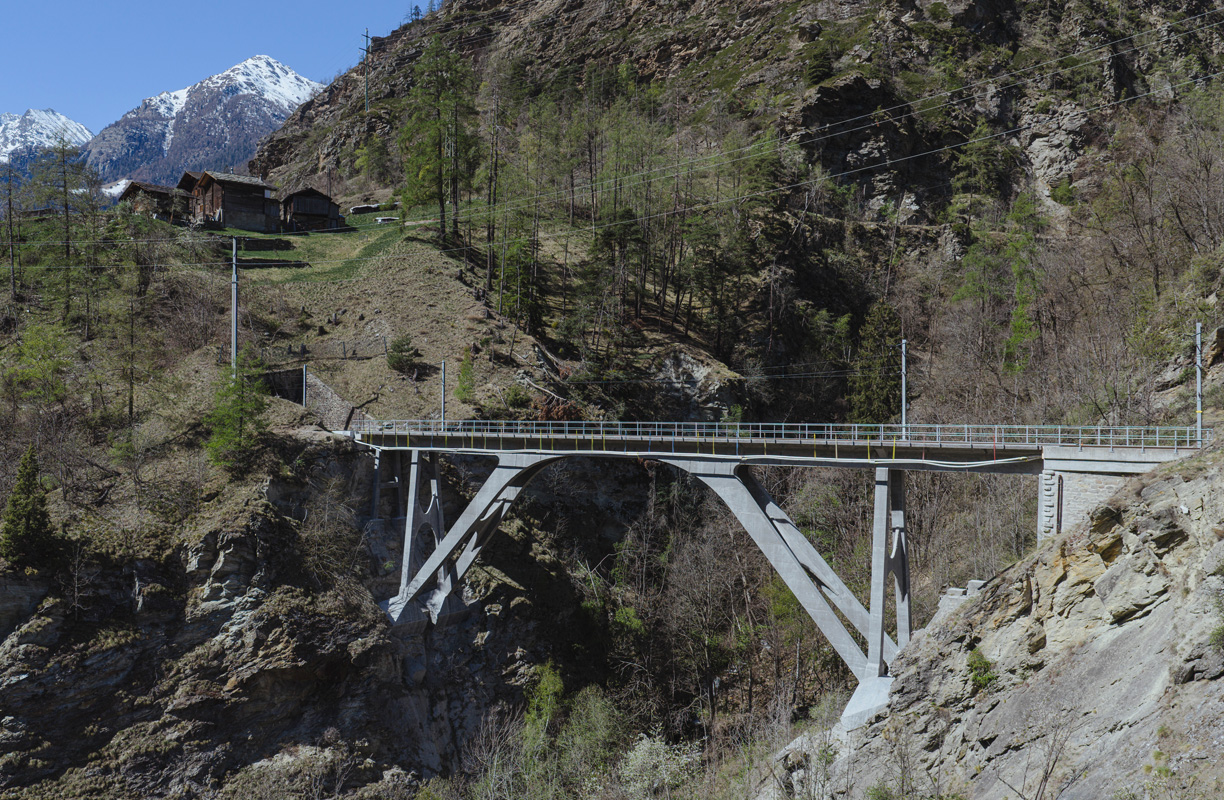
The Mühlebach Bridge, designed by engineer Alexandre Sarrasin (1895–1976) and built in 1959, is characterised by two inclined struts supporting the deck, giving the impression that the entire structure was cast in a single piece. This strut bridge typology follows the flow of forces and highlights the importance of the crossing; it is also one of the very few railway strut bridges in Switzerland.
After more than 60 years of service, the bridge showed a generally poor condition, with several significant cracks caused by alkali-silica reaction (ASR). Investigations revealed pathological degradation of the concrete, particularly in areas exposed to water. Despite this damage, the project focused on rehabilitating the existing structure.
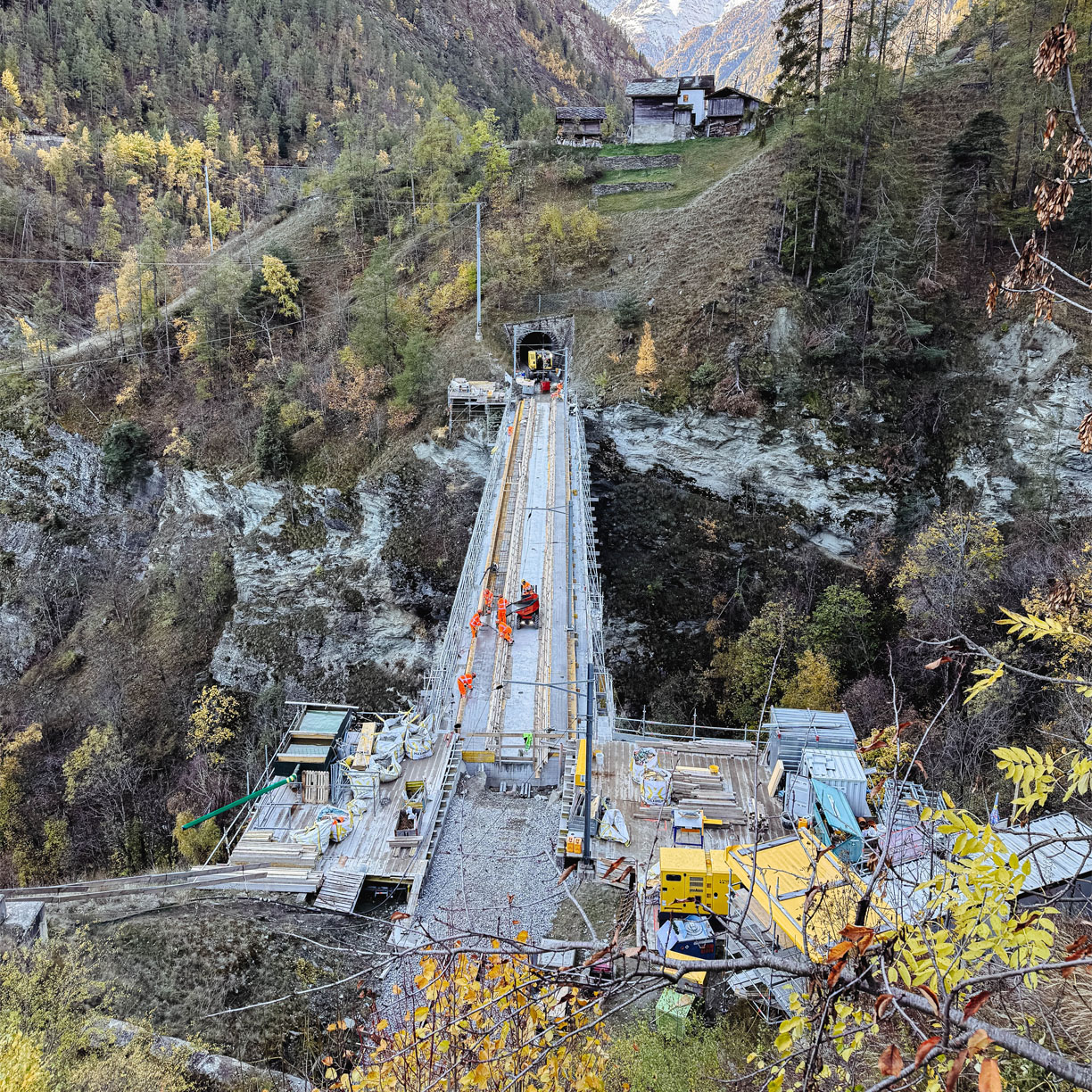
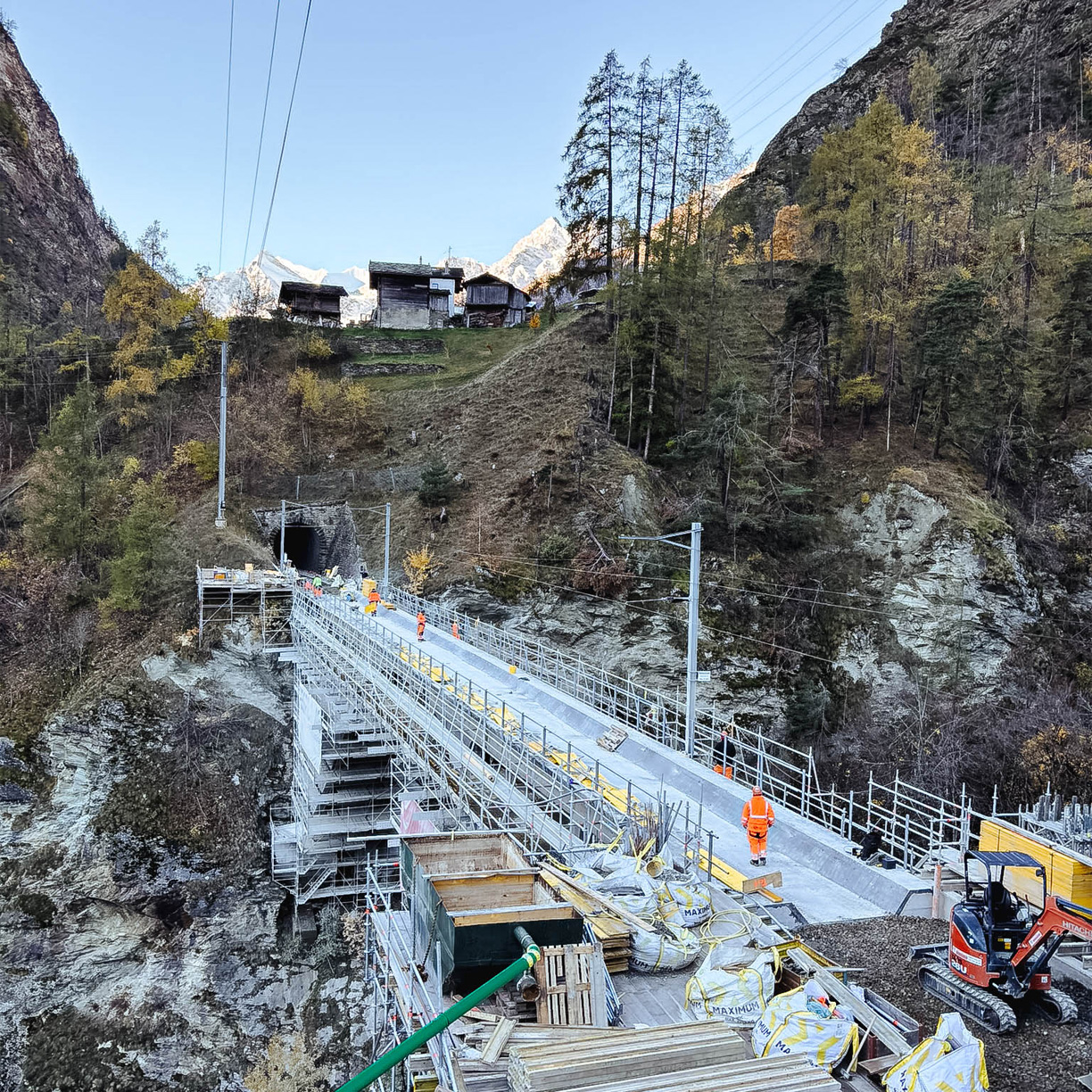
The selected solution consisted of constructing a complete jacketing around the foundations, struts and piers. After hydrodemolition of the ASR-damaged concrete, a new layer of ultra-high-performance fibre-reinforced concrete (UHPFRC) was applied. Its mechanical strength enhances the existing structure, while its compactness halts ongoing degradation processes. The deck was strengthened and widened with a UHPFRC trough to comply with regulatory widths for evacuation routes on the bridge.
Applying UHPFRC at the full scale of a bridge remains an uncommon approach. It required collective design efforts and highly precise execution to preserve the elegant image of a concrete strut bridge appearing as if cast in a single piece.
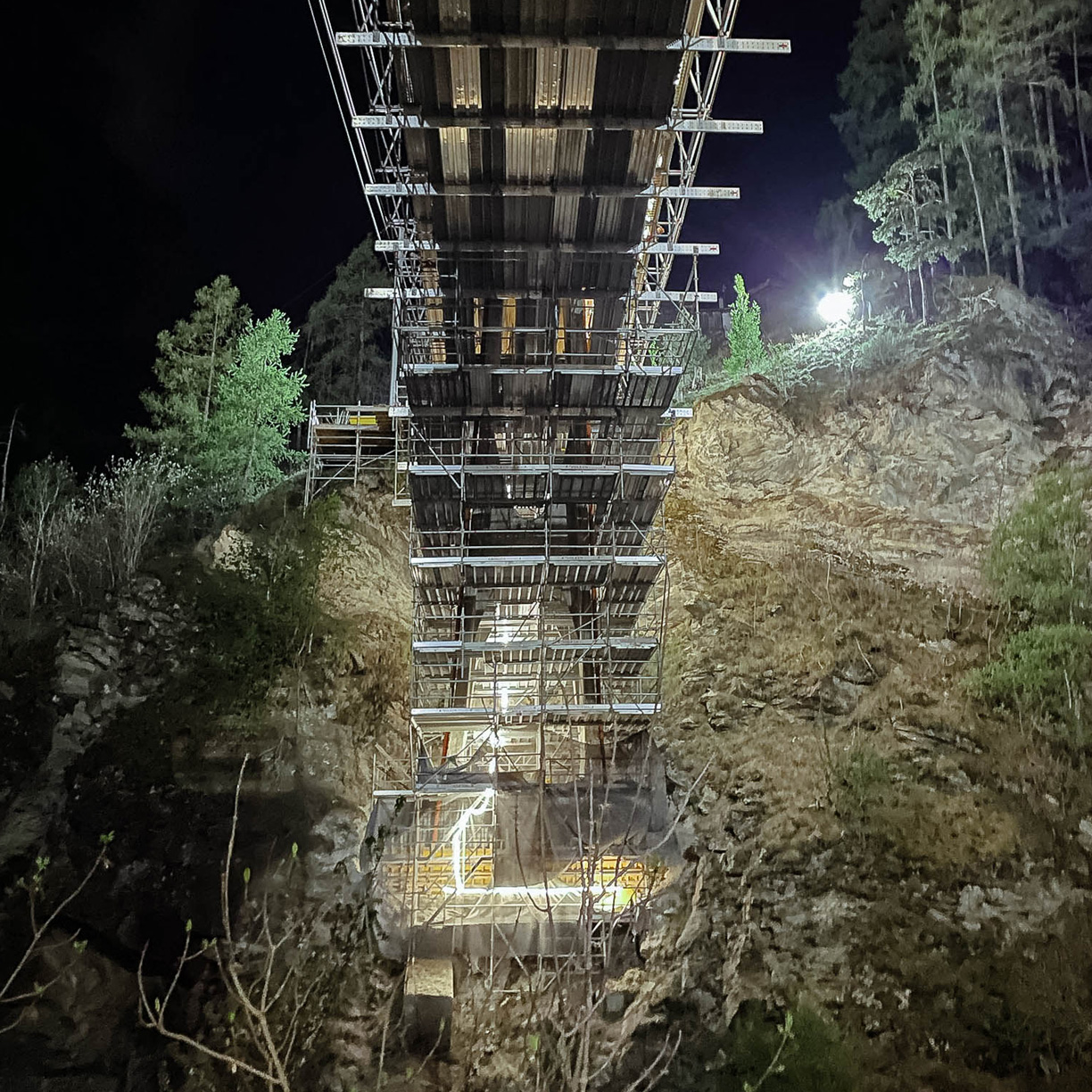
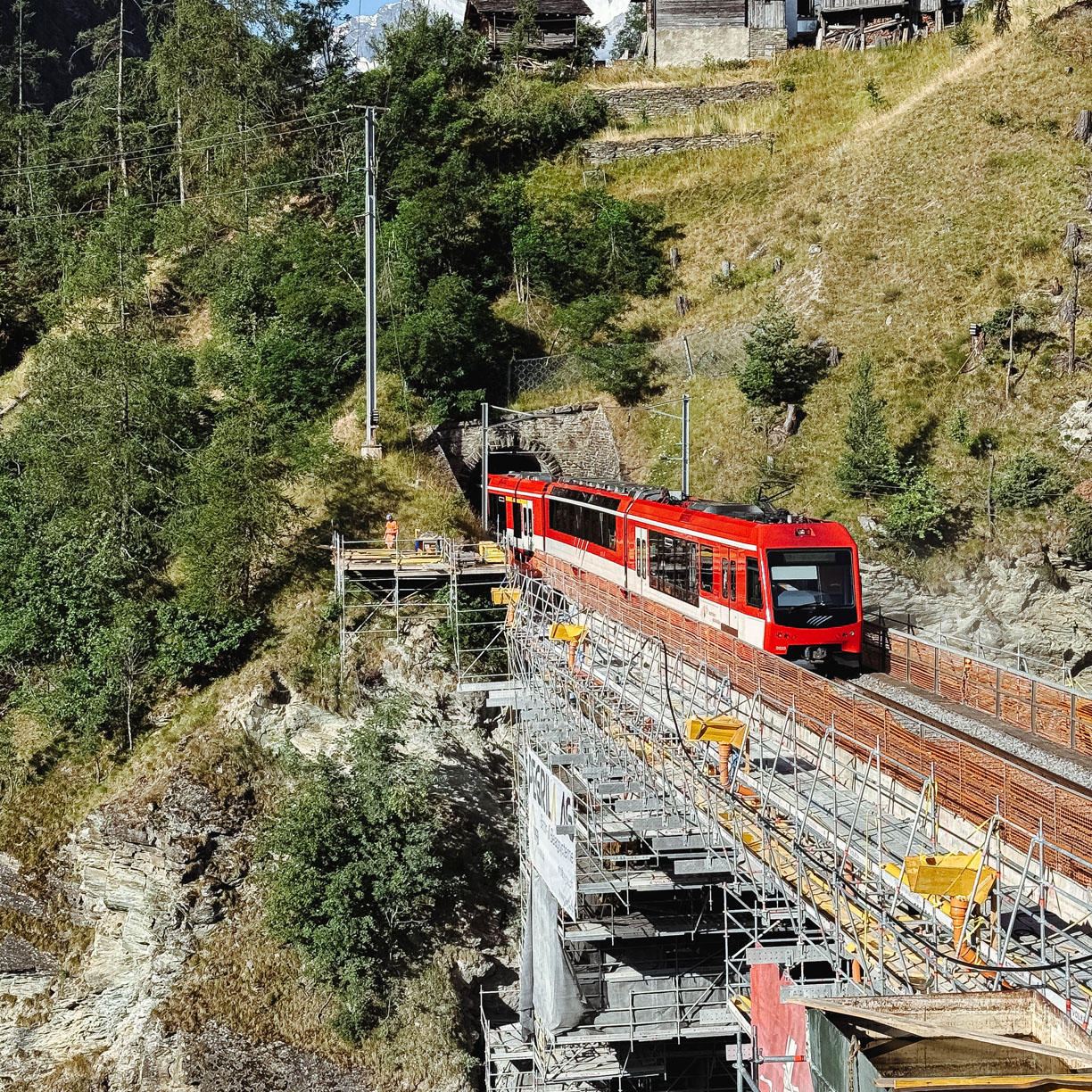
The construction site was located in a challenging geographical context, characterised by steep gorges and limited access. The works required the construction of a complete temporary platform, transportation of materials by train and helicopter, and the maintenance of rail traffic throughout the project, except for an annual closure dedicated to track maintenance.
Client: Matterhorn Gotthard Bahn
Engineers: Consortium IG AFRY‑INGPHI; Bridges lead: INGPHI
Bridge contractors: ARGE MGB Merjen, Volken AG – Schmid Bautech AG
Project :
Share the article :